Kate Bowler: Oh hello, I’m Kate Bowler and this is Everything Happens. So, you might know that I am a scholar of American religion in my day job at Duke University. And what it really means is that I’m always interested in the state of like, what is going on spiritually right now? And I just have had some questions about where we’re going, where we are going in North America in terms of like belief and how this relates to politics. And, well, I just thought maybe you might be interested too, so…
Just so you know, today I’ve asked two of my very smartest friends to come help me sort of reinterpret what is going on in American religion right now. And really, for the longest time, the story about Christianity in America was mostly about decline. We were talking about fewer people going to church, fewer churches, less institutional power, but now it seems like the story might be different.
So when I say also Christianity in America, just know this is of course not a monolith. There are Catholics and evangelicals and mainland Protestants and historically black churches and progressive churches and conservative ones and mega churches, charismatics, like just everybody and I could go on and on. Sometimes these groups align on certain issues and most often they don’t.
But the loudest versions of Christianity right now aren’t always the ones rooted in your local neighborhood churches. Some are deeply political. Some live mostly online. Some, as I’m sure you have figured out, are tied to what people call Christian nationalism. And just my shorthand definition for what this is, is the belief that God chose America to carry out God’s special purposes.
A lot of us then who are Christian are just trying to figure out what exactly we do with all of this. What do we decide we belong to? And how do we recognize the importance of faith when so many of the loudest versions of this are disjointed and sometimes terrifying. I mean, often like spiritually embarrassing when we want to think of our faith as being full of hope and love and trust.
So whether you’re in church every week or haven’t been for years, or you’re just kind of trying to understand like what is the deal with Christians lately, I really hope you enjoy nerding out with us for a bit.
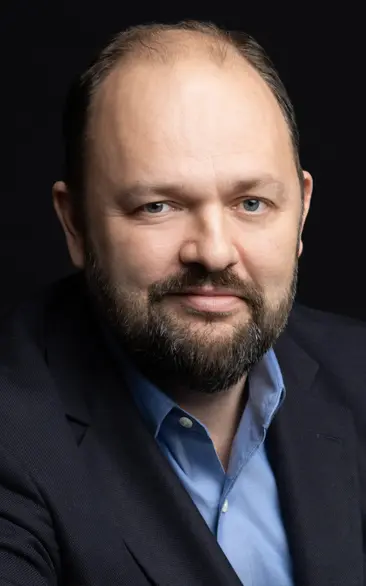
Ross Douthat is a ferociously talented and widely read columnist at the New York Times. I just love his writing. He’s so clear. He’s morally vigorous, and he’s got this omnivorous brain. He also hosts a podcast with the Times called Interesting Times, which I always read in a slightly sarcastic voice because it makes me laugh. He’s the author of many books like Bad Religion and Believe Why Everyone Should be religious. Can I really? Lovely memoir about illness and faith called The Deep Places that I loved so very much.
And Molly Worthen is a brilliant friend. She’s an incredible historian. She is a writer. I’ve gotten to have the great fortune of knowing for a million years, ranging way back to our grad school days. And we both have PhDs in American religion, but she had the audacity to work at UNC Chapel Hill as my arch nemesis. But she is a brillant thinker. She has published this excellent book called. Apostles of Reason, which focuses on the intellectual background of American evangelicalism. And just last year, a fantastic book called Spellbound, which really, honestly, had me hooked about the history of charisma. And you are going to love it as much as I do.
Our conversation today, if you can’t tell by the insanity of my voice, is because I kind of came to the end of having smart things to say about Christian nationalism. State of religion in America and why it might feel a little sad lately when we say, I’m a Christian, and then, no, really, I promise, the nice kind.
So you guys, thank you so much for doing this with me. It brings me so much joy.
Ross Douthat: Thank you for having us. That was such a lovely introduction. It’s impossible for us to live up to it, but we’ll try.
Kate Bowler: So then I’ll make my first question just open and despairing. It’s going to start with something like, what is happening right now and why does it feel so embarrassing? We have experienced so much transformation over the last five years on the national scene. So Ross, would you start us? How would you characterize the new landscape?
Ross Douthat: Well, let’s let’s start with good news, right, or relative good news depending on your perspective on Christianity at the moment. But basically the big story, bigger than Joel Osteen, in American religion for about 15 or 20 years was just a straightforward story of decline. Every year, fewer people identified with Christianity. The trend in church going was a little more complicated, but generally, fewer people were going to church and I think a certain kind of anxiety, nuttiness, and derangement in American religion has been linked to that sense of decline.
Like sometimes people say, oh, you know, as the church gets smaller, it will become more pure and more holy as Jesus intended, and it’ll be the salt of the earth. That may be true in some individual communities, but in practice, decline makes everyone anxious, grasping, panicky, sinful, judgmental. Like decline is tough.
So the good news is, for the moment, this may change, that decline has actually stopped. I think COVID sort of accelerated the decline to a kind of bottom, and there’s been some bounce back. So there is a kind stability in American religion right now in the mid-2020s that wasn’t there before. So that’s one piece, one piece of semi-good news.
I think another piece of good news is that in the worlds where Molly and I travel and she can… I’m curious about her view on this, but I think that in the world of academics, journalists, you know, the intelligentsia, to be very fancy about it, there’s more interest in an openness to religious ideas than there would have been 10 or 15 years ago. The heyday of the new atheists has passed. There’s sort of interest in and conversions to Christianity in particular, but there’s also, I think, just a general openness to possibilities. Divine possibilities that is itself linked to just how crazy and bizarre the world as a whole is, but that I think is new and different.
So those are two, I think two pieces of generally positive news and we can get into some of but more troubling patterns in a minute.
Kate Bowler: Well, we can stop saying secularism is triumphant, I guess.
Ross Douthat: America is not getting whatever it’s getting right now. It’s not at the moment getting more secular. No.
Kate Bowler: Molly, how do you characterize it at parties, which is when we would typically bring it up?
Molly Worthen: I do tend to lead with the story that Ross has summarized. A lot of the, especially younger people who are coming to Christianity with a sort of unformed set of questions, a kind of sense that the stories they’ve been told about what life means, what they should be doing, how they should derive meaning, just don’t really work.
I think they’re vulnerable, and there is some subset of these folks who I think can be lured into a highly politicized narrative of what Christianity is and what it means to be a Christian in life. But I think it’s a mistake to read things like the uptick in conversions in orthodoxy or the sort of swirl of religious interests that followed Charlie Kirk’s assassination or the interest in someone like Jordan Peterson.
I think it’s a mistake to read that as just this political desire, you know, on the part of young men to reassert the patriarchy. I think they can be taught to understand it in that way, but actually it’s driven by pre political questions.
I am generally in a place of, I don’t know, I’m not an optimistic person temperamentally, but for me, for my sort of, you know, Calvinistic baseline, I’m pretty optimistic. Maybe because I spend a lot of time having conversations about ultimate questions with like smart undergraduates who are either wrestling with the implications of the faith they grew up with, or are kind of inching their way toward Christianity. And they’re not doing so in a kind of culture warframe.
But I will say much of what I think people are worried about for good reason about our landscape is the surfacing and the kind of exaggeration of certain tendencies and syndromes that have kind of always been there in American culture and in perhaps the main swath of American Protestantism generally, but are perhaps more able to run riot because of how weak our institutions are.
I mean, I think up until this point, there have been certain breaks on the sort of the ability of the kind of anti-establishment, a populist anti-elite message to storm the battlements and those breaks are weaker than they’ve ever been before because I only know how to do the—
Kate Bowler: I just like on a personal level, I really know how to do the pro-institutional story about Christian growth. It goes like this. I work in a divinity school. I know how train pastors. I know to like care about how small communities are built around congregations and like trust in their religious leaders.
And when I see, for example, Christianity on the uptick in… like Sweden and Finland and Denmark lately, I think one thing that makes sense to me based on my institutional mindset is that these are numbers where people eventually decided to get baptized or decided to put their kids in Sunday school after they decided that their priest was a trusted figure and that maybe their pastor had reasonable views about the news.
It was just like a story of a pastor, just like doctors or politicians, being good for their culture and being like steady, weight-bearing members of society. And so that to me is like, okay, well, in Scandinavia, Christianity is rising because it’s pro-institution.
And it sounds like what you’re saying is like we see religious interest right now, but that’s not the same thing as a story about the health of institutions.
Ross Douthat: Well, I think there are American versions of that Scandinavian story, but they do, they tend to be, I would say, bottom up rather than top down, right?
So I’m Roman Catholic, and we are very accustomed to kind of top down analysis of our own church where people focus on who is the pope. But Catholicism has gone through this period of total sort of institutional discrediting through the sex abuse crisis, right, where you had… whatever sort of moral and political authority, the bishops, the hierarchy as a group enjoyed was gone as of about 10 years ago, right?
So you’re not, and you’re getting, I think, a Catholic renewal that’s driven primarily by loyalty or allegiance to or identification with the hierarchy of the church, whoever is the Pope, right.
But you are getting, I think, is a lot of Catholic parishes. I think maybe especially now in university towns and elsewhere that are bringing people into the faith who are having a genuine encounter with Christianity that is mediated primarily by the experience of an actual community. It’s not mediated by a sense of definite trust in the hierarchy of the church.
But I think that’s real. That just co-exists with a kind of… you know, highly Internet based and performative forms of faith that are definitely not rooted in communities.
But even there you want it. You don’t want to overgeneralize. There’s people who, you know, might be a performative Christian on the Internet for whom that is a bridge into actual practice and community of the faith. It’s not I don’t think it’s an either or. But definitely the internet, you know, the very online forms of Christianity are where you find certain distinctive pathologies of the 2020s, absolutely.
Molly Worthen: I’m struck by, I have some reason to think that we are bottoming out, at least in a meaningful way, relative to what it looks like for the past 10 years in our distaste, or distrust, of institutions.
I think a lot of these young people who are finding their way into church, they’ve realized that they do kind of want an institution. They want a framework and someone to connect them with the past and tell them to do hard things in community.
At the same time, there’s a way in which we can’t put the genie of the 1960s back in the bottle. When I think about even the most devout Southern Baptists I know, they still are far more inclined to, you know, skip church on a weekend to take their kid to the traveling soccer tournament.
Ross Douthat: That travel sports is, in fact, the real enemy of Christianity in America. Everyone, everyone can agree on this. Forget Republicans, Democrats, Trump, whatever. It’s travel sports.
Molly Worthen: That’s absolutely right.
So there’s some way in which even even people who are deeply committed, maybe there’s some subset of trad castes for whom this is not true. But even even people who are deeply committed to their—
Unknown: The skirts, the field hockey skirts are very long.
Molly Worthen: They still have a different way of thinking about it. It’s not so all-encompassing as it was two generations ago when you had church three nights a week and that was your whole world. And the idea of not turning over Sabbath to church would have been totally unthinkable. I think there are very few of those people now.
Kate Bowler: I went to Catholic school instead of my older sister, and she was super good at figuring out the finer points of the school uniform. But instead of trying to make her skirt shorter and shorter, like every girl, she tried to make hers longer and longer, and at some point she was like sweeping through the halls of St. Mary’s Academy with like an enormous bustle until she was put in judgment under God. I’m going to go ahead and turn it over to you.
Ross Douthat: That is proto-Tradwife, you know, before it’s time.
Kate Bowler: We’re going to be right back after a break to hear from our sponsors. Don’t go anywhere.
One of my theories, though, about the persistence of, like, institutional trust, I see especially in still the older generation at churches. And I think we can trace it based on volunteerism rates, because still about a quarter of Americans will volunteer, but their patterns of volunteering are completely different.
They’re much more likely to volunteer intermittently or like a one-off, sort of similarly to the way you’re describing, like church affiliation and loyalty. But these older, particularly women, they volunteer consistently in the same places over years and years and year, which really creates like a whole different webbing of how they experience their communities.
And one of my great worries about any of our spiritual lives is that because it’s still so piecemeal, it’s really, we just don’t have that long form allegiance that’s gonna hold us when we stop holding onto it.
Ross Douthat: Yeah, there’s a couple things. One is that it’s absolutely true that there is a kind of intense baby boomer connection to churches that is propping a lot of churches up right now.
And obviously, the baby boomers were a more secular generation than generations before them, but they also sort of sustained a level of religious engagement in terms of giving, you know, it’s… Catholics who supported Catholic schools, even if they weren’t going to mass, right? Like that kind of culture and that’s gonna go away and there’s gonna be a pretty painful adaptation for a lot of churches as they adjust to a world where even if there’s still, you know, plenty of people in church there is less of a culture of giving volunteering and so on that kind more intensive commitment.
But there’s also a class-bound element of religious change here where we have this stereotype religion in America, where it’s like, you know, the salt of the earth working class Americans are all going and going to church. And you know the secular upper middle class are all going to brunch or youth sports. And that’s not that’s just not true anymore.
It’s actually church going is more common among Americans with college degrees. It declines a little bit when you get to graduate degrees. It is true that like professors—present company, who love the Lord—our professors who love the law, some professors love the lord, others love others have other loves. But they’re pretty secular, but like upper middle class America is more practices religion more than working class America.
And that’s connected to the decline of social capital. It’s not that working class America is filled with atheists, but it’s filled with people who are disconnected from institutions.
I think one of the big questions for churches is how do they avoid just becoming their own form of social capital for people with college degrees, where it’s like, oh yeah, you know, everyone in a college town or everyone in the prosperous suburb knows someone who goes to church, but then, you go to the more working class community and people might believe in God, but they aren’t in church because they aren’t connected generally. And it’s not clear how that gets fixed.
You almost need… almost a kind of… well, maybe you need people trained in divinity schools, right? Whose mission is to go minister to, you know, post industrial America or something.
Kate Bowler: One of the new religious movements that has some charismatics in it, but is really like quite a smattering of people in which I find that we’re talking a lot about the sincerity of that movement is Christian nationalism. And you guys both know so much about it. Molly, could you like take a second to define what people mean by that?
Molly Worthen: Oh man, I mean this is the big problem—
Ross Douthat: Take a second there, Molly.
Molly Worthen: Yeah, I mean, just give us eight to 10 sometimes.
Well, yes, what frustrates me is that I think the huge numbers that you often see in the secular media, you know, a foot soldiers numbering, you know tens of millions poised to, you know, totally impose theocracy on America. And then you dig into the data chain by which these numbers are arrived at, and you find that there are these survey instruments that contain questions like, do you believe that God has control over the events in the world. Okay.
Kate Bowler: I’m really afraid so. I’m sure.
Molly Worthen: I frankly—so that was there was a study out of Denison University in which this was one of the questions. And it frankly kind of alarms me that only 37 percent of Christians who who responded said yes, because that’s such a that’s such a mainstream Christian belief.
So I think one of the things that makes Christian nationalism so slippery is that it is premised on—I mean, I suppose it’s like any heresy and that it takes tenants that are totally mainstream in Christianity that are biblical, that are creedal, and it warps them out of proportion.
Kate Bowler: It, I always think of it as like adding 25%.
Molly Worthen: I mean, the prosperity gospel is this way as well.
Kate Bowler: We believe God generally loves us, but how much? Exactly. Right.
Molly Worthen: So, you know, I think that Christian nationalism is a form of idolatry. It’s an inclination to collapse God’s will into the will of a particular set of political actors who prioritize access to and control of institutional and political power over everything else. So maybe that’s a good starting point. I’m sure Ross can flush that out better than I can.
Ross Douthat: Oh, yeah, thanks. Punt it to me.
There’s a form of Christian nationalism that has always been part of American religious life that is a kind of exaggeration of the kind of religious perspective that every country has about itself, right? Like, you know, if you hang out with French Catholics who like Joan of Arc. You know, they’ll explain to you how God had a very special plan for France that could only be operationalized by the maid of Orleans, right?
And you know, the same is true of many countries and many forms of Christian faith. Christians who have national loyalties always are sort of operating in a zone of like, well, what does God expect of our country? And then Christian nationalism pushes it a little bit further. And it says, you know, we’re not just, God doesn’t just have a plan for us. We’re the most important part of his plan, the founding.
I mean, you got a version of this with Glenn Beck during the Tea Party era, like a sort of quasi-ideification of the founding, like this is a persistent phenomenon that takes different forms at different moments.
I think, though, that part of what’s happened is that by any reasonable definition using polls of Christian nationalism where you take like five things you ask people—should america be a christian nation, should the law reflect biblical values, you know whatever things you want to take—by any definition you use christian nationalism has declined as christianity has declined.
America was a more christian nationalist society in the sense of like more people believing in these things under George W Bush than it is under Donald Trump by far. So that’s a really important part of the story.
At the same time, again, as we’ve talked about institutional Christianity being weaker, we’ve talk about the internet as sort of a zone of entrepreneurship.
As Christianity—institutional Christianity—have gotten weaker, there is a space for intellectuals, you know, ideologues and everywhere in between, find an audience by sort of staking, staking a strong claim where you say, “Oh, Christianity is in decline. That’s because we ceded too much ground to liberalism or pluralism and what we need is a stronger assertion of Christian politics.”
And some people are happy to take that all the way to saying, yes, I am a Christian nationalist.
And I mean, it’s also like in Catholicism there was this phrase that only is used by intellectuals called integralism. This is like essentially the idea that thrown and alter politics, like what you had before the French Revolution. And in the first Trump term, there was kind of a vogue for integralism among younger Catholic intellectuals that’s still present. This is not an important part of American politics, but it’s there.
And then you have something similar with evangelical intellectuals, I think. Afterward, they’re like, well, the Catholics have integralism. What do we have? Right? And so then you get people are like, well, we’re staking a claim to Christian nationalism and you get books defending Christian nationalism.
And I guess it’s just hard in this environment to say like, you know, how important is this really? Like Pete Hegseth. Pete Hekseth is, he goes to a, you know Calvinist church connected to Douglas Wilson. Douglas Wilson, I’ve interviewed him. He identifies as a Christian nationalist. Pete Hegsess is a secretary of defense.
And you could say, ah, Christian nationalism on the rise in control of the Pentagon, right?
But again, if you look at like what the Trump administration is actually doing on policy, it’s more socially liberal than past Republican presidents. If you look at the country as a whole, like America has legalized gambling and pot. And like, like this is, this is not a Christian nation. Like we’re not headed for Puritan New England. We’re headed in the other direction.
So there’s some dynamic interaction between America getting less puritanical and certain parts of Christianity being like, well, you know what? The Puritans had a point. It’s complicated.
Molly Worthen: Maybe there’s this way in which for a long time, the broad framework of the Cold War kind of domesticated and mainstreamed what we would call Christian nationalism, you know, over the course of that part of American history.
And I think of historical episodes in which scholars have gone back and tried to find evidence—kind of smoking gun evidence of particular theological commitments in forming specific foreign policy decisions.
So, you know, one period in American history that’s come on under a lot of scrutiny in this way is the Reagan administration, in which Reagan himself expressed interest in a pretty imminent, vivid understanding of the end times, several members of his cabinet, likewise.
And so if there was ever a point at least over a vast swath of American history in which we might expect to find the fingerprints of specific theological goals on American policy, it would be in the Reagan years.
And really, that isn’t what historians have found, I mean, they’ve sort of struggled to come up with any way to connect the dots in a way that yields specific foreign policy outcomes.
You know, if anything, Reagan made the decision to allow relations with Israel to cool. And we now know that he wanted to eliminate nuclear weapons and not use them to bring about the end times.
But I think what’s different now is that we have a few quite energetic sort of celebrity Christian nationalists. And Doug Wilson is one who has not only this really interesting history of, you know, having done his time as in spade work in the in the Republican Party trenches in the kind of early days of the Christian right and becoming disillusioned.
As he told me, I went out and interviewed him and wrote about his college in Idaho almost 20 years ago now.
At that time, he was disillusions with, you know, really direct, direct action and direct involvement in policy.
He’s a post-millennialist, which means, you know, his eschatology is not one that expects prophecy to drag us further into the mire of sin and suffering and only then will Jesus come, but rather Christians are supposed to usher in, over a long period of time, the millennium and then Jesus will return again.
So he operates on a time horizon of centuries, and when he founded this classical Christian College, New St. Andrews out in Idaho, as well as nurtured this quite incredible network of homeschools and classical Christian K through 12 schools, it was with this long horizon of change in mind and sort of gradual cultural shift.
But fast forward to our current moment. And I think that is all still true, but he does have this very particular connection with the administration.
And what’s perhaps, what makes it maybe tempting, perhaps to some extent reasonable to pay closer attention to those connections now is that we’re in a kind of crisis of meaning and crisis of liberalism.
And I think this is not just true in America, but really across the West.
I think there’s a sense that those who would seek to counter Christian nationalism as a narrative of what the purpose of this country is for, are grasping at straws and don’t really know what story they want to tell.
And I think the outcome of the last election is partly a story of that vacuum and the way in which Democrats and anti-Trump Republicans have not yet hit on the counter narrative.
And I think Ross is right, that Christian nationalism does not—if we try to map it onto what Trump has decided to do over his time in office so far, it does not turn out to be the master key, but it’s a powerful narrative at a time when we have a kind of desert of narratives.
Ross Douthat: It’s a key, it’s a key to some symbolism, right?
Like Trump, Trump is more overt in public expressions of Christianity than, then certainly like a president John McCain would have been, right. Trump will, you know, tweet about Catholic feast days or St. Michael or something.
And that is something that some Christian nationalists and some Catholic integralists like. They like the idea of the government being more symbolically aligned with Christianity. But it’s also… just symbolism, right?
It’s not, you know, by the same token, Trump has chronically disappointed pro-life activists, right. And so, you know, it’s a pretty poor Christian nationalist administration that doesn’t even try and regulate the abortion pill, right, like you’d expect, you’d except something more from a authentically Christian nationalist administration.
I think the other thing is related to what Molly was saying about the crisis of meaning. I think there’s a crisis of meaning, but also related to that, a sense of possibility where people, and this is not just true on the Christian right, you see this with different left-wing factions and people say, ah, the liberal order is in crisis. And so maybe my very bespoke boutique set of ideas could actually take over. Why not?
Unknown: Mm-hmm.
Ross Douthat: It has to be someone why not me, right?
So someone who like Wilson who sort of had retreated and was sort of like doing a kind of, you know patriarchal benedict option if you will out in Idaho, right, could be like hey, wait a minute. You know, maybe, maybe the time is right to you know hasten that hasten that millennium.
But again, I don’t think this is confined to conservative christians or religious believers. I think you saw this with wokeness that people people on the left, progressive activists, were like, oh, there’s a vacuum. Well, maybe we can fill it with anti-racism and sort of therapeutic progressivism.
I think it’s a common phenomenon when you have this hole in the center of the culture for different extreme seeming groups to try and fill it.
Kate Bowler: When I did my study of the prosperity gospel, it took me a while to kind of get my hands around like how big the movement was, but I was like, okay, well, I’ll study what the hub schools are, what language they use, what large churches they speak in, and I’ll kind of get a sense of the proportion of it, and sort of figured out that about 30% of the churches over 2,000 preach some kind of prosperity gospel.
What, like… can you give me like any sense of the proportion you think of the movement with like leaders and places and schools and churches?
Ross Douthat: My assumption would be if you tried to do a theological mapping, thin Christian nationalism, which is like American flags on the altar and, you know, God loves America. That’s really common. That’s like, you know, all over, lots of megachurch Christianity would count. But that’s really thin and that’s not what people find scary.
I think if you’re talking about like people who, you know, are certainly who would match the Douglas Wilson definition you’re talking about something much smaller than the prosperity gospel.
But then it’s also and like what is this the standards of what counts as sort of threatening religion also change. Something like a belief in having the Ten Commandments in a courthouse, right? For I don’t know what the polls say today but when I was 20, I would say that probably would poll at like 65 or 70 percent.
Now is that Christian nationalism? Is that a generic Christianity that’s like, the Ten Commandments are good, of course they should be in a courthouse. I just think you have to be careful about asserting that any sort of one thing is its scariest expression.
Lots of people would say yes in a poll to prayer in schools without wanting Doug Wilson to lead that prayer.
Kate Bowler: Right. Yeah.
I want to ask about that, that sort of the feeling that there was a vacuum that conservatives and this form of conservative is filling because I keep hearing from my most conservative friends that the cruelty that you hear from religious leaders right now has a good reason that liberals have a toxic empathy, that one of the unifying factors of what filled the was like a… pro-empathy, everyone should be largely fueled by a sense of common humanity, and that we actually need to find ways to talk about what makes God angry and not just what makes people love each other.
I’m curious what sustains that kind of mindset right now, that this sharp rhetoric that sometimes is like overtly hateful meme culture is actually Christian.
Ross Douthat: The internet is a machine for confirming your sense of just how horrible your enemies are.
And I think that’s important to keep in mind as a backdrop to understanding both left and right right now that people are constantly delivered confirmation and affirmation of their hatred and fear of their enemies. And delivered it, you know, these are not AI deepfakes, right? Or they don’t have to be. They’re delivered real examples of their enemies doing bad things.
And it’s just that the algorithm makes it seem like that’s the entirety of the world, right.
So when it comes to, you mentioned the sort of evangelical critique of toxic empathy on the left. Without taking a stance on whether toxic empathy is the right way to put it. I would say that there were a lot of extremely toxic elements in progressive politics and culture over the last five to 10 years. Like really toxic, like no joke, not like, oh, the right is hyping a couple women’s studies professors at Oberlin. No, like in the sense that like noxious ideas took over powerful American institutions and had profoundly negative effects on people’s lives. I think that’s real and conservatives are correct to make note of it. I’m not just make note of it to object to it, right?
The dynamic now though, where some of those ideas have been pushed back. Donald Trump is president of the United States, right, is such that basically if your worldview was formed by that experience, the internet is still delivering you tons of examples of, you know, crazy things the left is doing every day, and you are often just not like forced to front bad things that Donald Trump or your allies are doing.
So yes there are evangelical christians who sort of lean fully into a politics of you know smash mouth aggression and so on. There’s also just a lot of people who are like i’m against the left have good reasons for being against the left and i tend to assume that the left complaints about my own side are overblown and people always think that way.
The internet makes it easier to think that way and i don’t know how i mean I can sound smug myself, right? You don’t wanna be like, well, I, only I see the fullness, the fullness of truth from my position, right.
I’m as, you know, I’m sure as blinkered as anyone in my own way, but clearly that siloing and that sort of failure to see fully the evils on your own side is just part of life and politics right now.
Kate Bowler: Yeah, it really makes me worry in particular about the skyrocketing rates of family estrangement as people’s silos make them more and more isolated even from their like, the people who love them most and just want this dinner to be fine.
We’re going to take a quick break to tell you about the sponsors of this show. We’ll be right back.
Since both of you are very, just like very Christian people, I just wonder if right now in perhaps one of faith’s most embarrassing hours, I won’t say most dire hours, but perhaps most embarrassing ours, what’s giving you most hope about being a person of faith right now?
Molly, you’re like, you pick a weird moment to convert, I’ll tell you that much.
Molly Worthen: Yeah, I, well, I you know, I got evangelized in the context of a Southern Baptist megachurch. It wasn’t, it wasn’t the path into Christianity. I was envisioned for myself.
My previous efforts to become a Christian had been very respectable, Anglo Catholic, Orthodox, I always thought eventually I would become a Catholic. I think there’s still time.
Kate Bowler: Yeah, there’s still time you guys. You guys play the long game.
Ross Douthat: We’re fixing some things, we’re making some improvements over here.
Molly Worthen: And there was a moment, you know, when I realized what had happened, and that I believe Jesus is who he says he is, I thought, okay, this will be easier for everybody if I just scoot over to an Anglican church or go do this properly with the Catholics.
But I decided, you know, I’m an evangelical, I mean, and now is like the most important time for me to… openly proud that I am an evangelical and to lean into what I have always thought was true.
My whole writing career has been an attempt to show to mostly secular readers the messiness and diversity and internal complexity and constant civil wars in those religious subcultures that I—
So I’m hopeful because, you know, I’m in a church that I think is doing the right thing and trying to thread the needle and encourage Christians to critique their own political side, right?
I mean, it seems to me you cannot be a Christian by yourself. You have to find a place to stand. Every Christian community has certain dimensions of the interlocking paradoxes that up Christianity. That it’s… it has an instinct for, but it’s pretty good at. And it has other paradoxes that it’s pretty bad and tends to screw up, right?
And I think you get used to the parochialisms and the blind spots of your own community. And every so often, you’ve gotta pull back from that and see that you are just standing in one spot and it is so much bigger than you. So to the extent that I manage to make that a habit, I stay reasonably optimistic.
Kate Bowler: Also, Molly, this is my favorite thing about knowing you for, I don’t know, like 10, at least over a decade, but that excitement in your voice in which you are describing, exploring the mysteries of faith is the same voice that you use when you are that interested in everybody else’s beliefs.
So it’s just like your curiosity has been one of the kindest through lines of knowing you, and I just find it like very—well, I’m—
Molly Worthen: Well, I’m like a scientist who entered my own experiment. It is exciting. I love it.
Kate Bowler: I love it. It’s so good.
Ross, what’s giving you hope right now?
Ross Douthat: Two things on hope and one on something adjacent to hope.
I find this moment in my particular weird role to be an easier time to be a Christian than it was when I started writing at the New York Times. This is not true everywhere, but I do think that there is a receptivity to ideas about religion in the mid 2020s that wasn’t present at sort of peak Christopher Hitchens or Richard Dawkins, and I’m glad of that. It may not last, but I’m appreciating it. So that’s one thing.
The second thing is it’s always embarrassing. What is the non-embarrassing moment in Christian history? I’m sorry.
Speaking of Catholics, there was a Catholic apologist who wrote a book once called The Twelfth, The Greatest all centuries, right? So, you know, maybe, maybe the 12th century. Very not embarrassing, like peak of medieval Catholicism. Okay, but other than that, it’s like—
Unknown: You know, what do you do on religious warfare? You know you’ve got charismatic movements doing crazy things. You got puppets. I own several Christian puppets puppet. I mean, exactly. There is a puppet phase there. You know all of Christian rock music. I mean look.
Ross Douthat: It’s, you know, it’s the wisdom, the wisdom of God is anyway, it it’s always embarrassing and I don’t and there’s always political corruption and profound political problems related to Christianity, as long as Christianity is influential in society.
And there’s you can romanticize a world where it’s not where you aren’t politically compromised, but that world will have its own problems, which leads me to the final thing, which is not so much optimism, but like, there’s a lot of things in play in the world right now that are not related to Christian nationalists, evangelicals who are embarrassing about Donald Trump, you know, godless university professors, all of these things.
But like we’re operating in the shadow of some pretty profound potential changes related to artificial intelligence in particular, but also sort of, you have the larger crisis of liberalism that Molly mentioned.
And I’m, I’m not convinced that the problems in religious politics right now are the main problems at all that Christians need to be worried about.
I think we may be entering a period where Christianity is going to seem essential in a different way than it has felt in the politics and culture of most of my lifetime. And in a way, I hope, again, this is not optimism exactly because I’m not really sure I want to undergo this experience, but I think there’s kind of a narrow—huh?—ahead of humanity, and if there’s anything Christianity is supposed to be good at, it’s helping people walk a pretty narrow path with some pretty serious dangers on either side.
Kate Bowler: Oh, that’s so good.
Ross and Molly, you’re my favorite people to read. Thank you for being the brains that could hold my current anxieties, my political stress and my desire to be more and more Mennonite as the days go on. Guys, I really appreciate you both. Thank you so much for doing this with me.
And I really believe that good close readings and deep curiosity are gonna pull us all forward. So thanks for doing that for me.
Ross Douthat: Amen to that. Thank you. This was a lot of fun.
Molly Worthen: Say, this was fun.
Kate Bowler: I mean… As someone who trains pastors, as someone who hopes my son will always feel at home in church, I know that it is very complicated to be a Christian right now.
And I’m Canadian, which you probably know by now. So faith and national identity were never quite braided together in the same way for me.
I will never forget it was in high school. And I had just learned about American evangelicalism. And we had this, we were just getting a lot of resources that were just from the states. And we have this little instruction manual about how we could be good Canadians. And it included just a ceremony we could do.
So we followed it step by step. We went outside, we found our Canadian flagpole, and then they asked us to all hold hands around it. And then all of a sudden, one of us stopped and someone said out loud, Wait, I don’t think this is what Canadians do. We do not have a belief that God chose Canada for magical purposes.
So as Christian nationalism has its moment here in the States, it gives me pause. I will be honest in saying it often makes me feel like I am more at home in the opposite direction, becoming, if anything, like more Mennonite, the faith tradition of my husband and his family and the churches that I grew up in.
And by becoming more Mennonite, I just mean like smaller, more local, more like still loving my institutional churches, but just being very communal, very interested in belonging and loving our actual neighbors. Yes, even the one that complains about light pollution or isn’t grateful when you chop a tree branch down and pay for it, that sort of thing. Just real people.
I wanna have a faith that shows up with food and at funerals that understands that church is not meant to be a voting block, but as a way of being with each other.
So maybe this is what I believe God still does in and through the capital C church, not to seize power or dominate headlines, but to knit people together, to teach us how to forgive each other, to interrupt our worst instincts, to feed us at tables where no one has earned their seat to begin with, and send us back out into the world a little softer than we were before.
That really is what gives me hope, all of those lovely people.
So, my dears, it is not lost on me that you spend this time listening or watching on YouTube, so just thank you. I really am so grateful you’re here.
And if you want, come find me over on Substack because I have found the nicest place on the internet and you get to see all the best comments and see this community know and love each other. It really is a gift.
So also, if you don’t know what Substack is, just know it can be an app, but it’s also just a website. So it’s at kateboehler.substack.com and I’m also gonna share short reflections there every day of Lent and it’s totally free. I’d love to have you.
And my book, Joyful Anyway, comes out in a few weeks. And I would be over the moon if you grabbed a copy or join me on one of the book tour stops. And all of that info is at kateboller.com slash joyful anyway.
This episode was made possible through the generosity of Lilly Endowment as part of our series on Christian spirituality. Thank you so much to them.
And thank you to my amazing team who makes everything happen over here at Everything Happens. Jess Richie, Harriet Putman, Keith Weston, Hailey Duret, Anne Herring. Megan Crunkleton, Eliza Nao, Anna Fitzgerald-Peterson, and Katherine Smith.
This is Everything Happens with me, Kate Bowler.