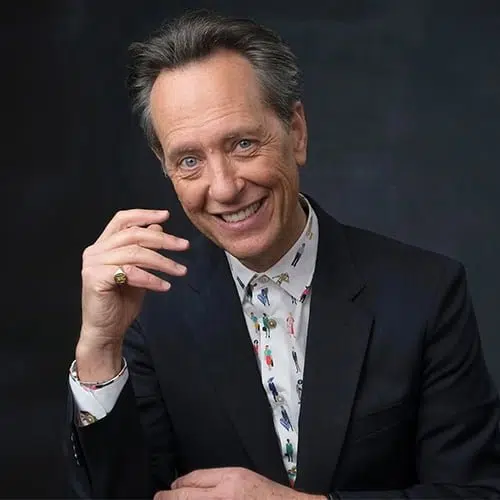
Tomáš Halík

Doubt, Depth, and the Future of Belief

What happens to faith when certainty collapses? Kate Bowler sits down with theologian and former underground priest Tomáš Halík to explore belief forged under surveillance, the spiritual value of doubt, and why going deeper—not louder—might be the only faithful response to a fractured world. Together, they consider silence, suffering, and what it means to remain open to God when clarity is nowhere to be found.

LISTEN ON YOUR FAVORITE PLATFORM:

What happens to faith when certainty collapses? Kate Bowler sits down with theologian and former underground priest Tomáš Halík to explore belief forged under surveillance, the spiritual value of doubt, and why going deeper—not louder—might be the only faithful response to a fractured world. Together, they consider silence, suffering, and what it means to remain open to God when clarity is nowhere to be found.
Resources Mentioned in this Episode

Watch the live conversation on YouTube
Touch the Wounds — Tomáš Halík
Tomorrow’s Christianity — Tomáš Halík

Transcript

Kate Bowler: What kind of faith survives when it has no power at all? That’s at the heart of my conversation today. I’m speaking with someone whose life sounds almost impossible. Father Thomas Halleck grew up behind the Iron Curtain in communist Czechoslovakia, in a country where priests were imprisoned and the church was treated as a political threat. He trained for the priesthood in secret. He was ordained in secret, He ministered under constant surveillance. And somehow, in the midst of all that, in the long shadow of state atheism, he did not lose faith. He found it. He’s a theologian who writes about silence and doubt and beauty and how to keep faith alive when there seems very little evidence for its necessity. Many of us have felt like the ground is shifting underneath us, like culturally, technologically, spiritually. So I wanted to ask Thomas what faith might have to say to the rest of us now. Thomas, I am so grateful you’re here.

Tomas: So first of all, thank you for inviting me. So I was born in the year when the communists came to power in our Czechoslovak Republic, which has a long, very complicated religious history. We can speak about it also. And also democratic tradition, because the Czechoslovak Republic was founded Immediately after the First World War, we were part of the Austrian-Hungarian Habsburg monarchy. And then the first president of Czechoslovakia was the philosopher Tomáš Garik-Massarek. And the Czechoslovakia was, for these 20 years, from the 1980s until the Second World War, the island of democracy in the center of Europe. Also in the 30s when was the authoritarian regimes in Hungary and in Poland and of course in Germany. So we were the last island of democracies. So there’s always… The democratic culture is something which is very important for us. And then in 1948 came the communist push and immediately the period of Stalinization, which It was very hard in our country, especially… There was a very hard persecution of the churches, because the religious situation of our country is very complicated, the Hussite wars, then the violent recolonization in the 17th century, then the connection of the church with the Austrian monarchy. So the modern nationalism them. In the Czech lands, Bohemia and Moravia, was mostly anti-clerical. It was something that was quite different than in Poland. In Poland, the Catholic Church was a pillar of the national identity against the Russian orthodoxy and, again, the German Protestantism. So it was always… I am Polish, I am Catholic, it was very different in our country, just to make the long story short, because of this anti-clerical tradition, I think the Soviets have chosen Czechoslovakia as the experimental field. For a total atheization of the society. So the persecution of the church was much harder than in the other neighbor socialist countries. Some priests were executed, many priests and believers, especially the Catholic intelligentsia, they were sent to prison for 25 years. And to do some concentration camps and so they were my spiritual teachers and because I met those people in late 60s and I was surprised they were not broken they were very wise people with humor with a very living faith, and some of them, in the presence, dreamt… About the future of the church and said perhaps this persecution is also the time for some purification of the Church, purification from this triumphalism of the Habsburg time. So they dreamed if the church will someday free, it must be a different church. It must be the poor church, it might be the ecumenical church. It must the open-minded church. It must be the serving Church.

Kate Bowler: You almost had a very nice life.

Tomas: It was not boring, yes, it was not BORING.

Kate Bowler: I mean you were studying in England, you were having a very nice time, you’re smart, they were smart, you could have stayed. The end. But it was 1968, and there was a flowering of freedoms in Czechoslovakia that, known as the Prague Spring, and then you heard the news that over a half a million Soviet troops were about to occupy your country. What was going through your mind at that time?

Tomas: Okay, so this period of Stalinism, it was a very hard period of the 50s. During the 60s, it’s a little bit better, and then came the Prague Spring in 68. It was not freedom, but it was some attempt of some reform communist to make something like the democratic socialism. And then in 68… Which was the spring of my life, I was 20. It was the Spring of our hopes in the democracy. It was a spring of the church immediately after the Vatican II. So in this year, I met those priests. They came after 15 years from prison and it was my inspiration for my conversion. I was rush converted because my parents were more the secular humanists. My father was the intellectual historian of literature. So I brought on in the Prague intellectual family. But like in that time, the intellectuals have some distance from the church. So I was brought up in the spirit of the secular Humanism. And the belief in progress and democracy and so on. And so I find my way to Christianity step by step. So it was the first time I was allowed to go to the West. I went for the course in English to England until August. 20S, but the last day I spent in Oxford and it was so charming for me, the Oxford, it was like a dream and then I was so tired that I postponed the return from England for 21st and the 21st was just the day of the occupation, so I was with my suitcases at Victoria Station. And I seen some Swiss students reading the newspaper, Soviet tanks in Prague. So I said, my God, the border are closed. And then I returned…
Tomas: And then I returned to the college where there were some Czech students and Czechoslovak students, and they said, oh, we will stay here. There is no possibility to return. And some of them decided for emigration immediately. So I was there ten days, trying some connections with my parents and so on. And then I was offered to study at one British university. I started, but…

In December 1968 in Britain, I received this letter from my friends that there is still something possible to do, but all the leading personalities are away, they emigrated. Should you not return?

So in the first moment, I thought that’s nonsense. I’m so happy here, I’m absolutely happy at the English university and in the West, and I have a perspective. And then I asked, is it the sense of my life to have a nice life, or to be somewhere where I am needed?

So I prayed all night, and in the morning I sent a letter: I will return.

And I returned, and I think it was the beginning of my vocation to be a priest.

There was only one seminary, which was absolutely controlled by the state, and I already had some connections with dissidents, especially Václav Havel—he was later president, he was my very good friend for 40 years—so I got also some black points. And there was no chance to enter the official priest seminary.

So I got the only possibility to study in the underground. There were some lectures in private flats and so on.

And then I was secretly ordained in East Germany, because at that time we could not travel to the West. But it was possible to travel to East Germany, Poland, and Hungary, these socialist states. And the Church in East Germany was not completely free, but it had more freedom.

So I spent some holidays in a monastery in Germany. They brought everything from West Germany—the literature, theological books. So I spent my holidays reading in the Baroque library from early morning till after midnight, trying to absorb everything from contemporary theology.

And I was ordained in the private chapel of the bishop of Erfurt. They took me in a car, I was lying in the car, and they put a coat over me because there were cameras of the secret police, the Stasi.

And even my mother was not allowed to know that I was a priest.

So I spent 11 years in the underground church. My civil profession was a psychotherapist working with drug abusers and alcoholics. I studied sociology and philosophy and then psychology.

But that was also my first conflict with the communist regime. During the ceremony of my doctoral degree, it was the custom that one of the new doctors gave a speech. They gave me a prepared speech—thanks to the government, loyalty to Marx and Lenin, and so on.

Kate Bowler: You have a moment where you could experience all of the fruits of your labor. You are given a speech you cannot possibly read, and that cost you very dearly.

Tomas: Of course. And instead, I ended with a quotation from Karel Čapek: that the truth is more powerful than power, because it is for eternity.

After this, all the relatives and colleagues came with roses—it became a kind of demonstration. But someone reported it immediately, and soon I was told I would never be allowed to teach at the university. This “eternity” lasted 20 years.

So I got only this job as a psychotherapist with alcoholics and drug abusers. But it was for me a great experience.

Kate Bowler: We’re going to be right back after a break… I really do want to ask you about how that transition must have felt—being trained in one thing and then exiled from it. What did you learn theologically from psychology that you wouldn’t have known otherwise?

Tomas: Absolutely, it was a great experience. God is always a God of surprise. If He closes one door, He opens another. We should not only knock on the closed door.

I like a Jewish joke: a woman prays for ten years to win the lottery. God gives no answer. She asks a rabbi, and the rabbi says: “Buy a ticket.”

Sometimes God says no. And when He closes doors, we should turn—and see the new doors that are open.

Crisis is always an opportunity—to go deeper, to think differently.

Working with alcoholics, I realized they are among the poorest of the poor. I grew up among intellectuals, but a priest is sent to the poor.

They lose everything—money, family, health, work. And I realized: this is my mission.

And suffering became very important theologically for me.
I was once in India, at the place traditionally connected to the martyrdom of the apostle Thomas. I celebrated Mass in the cathedral, reading about Thomas touching the wounds of Christ.

Later, I visited an orphanage nearby—so many poor, sick children. It was a terrible experience.

I remembered Dostoyevsky: “I return my ticket to a world where children suffer.”

And then I realized—these are the wounds of Christ today.

If we ignore the wounds of Christ today—the suffering, the poor, the violence—we have no right to say, “My Lord and my God.”

We see God through the window of these wounds.

And it is the only moment in the Gospel when Jesus is called God—when Thomas touches the wounds.

So I cannot believe in God without wounds. I cannot believe in a Church without wounds. Wounds are the sign of authenticity.

Kate Bowler: I think so many people in this room have professions in which they regularly come close to people who are suffering in some kind of way—anxiety or despair—and just to feel so encouraged by what you said: that the closer we get to universal pain, the closer we get to God. That feeling that you were exiled into one community and then found that God was already there.

You seem to go deeper and deeper into your faith. But one thing that really impressed me was how wise you had to be in choosing how to be religious. You weren’t allowed to be religious publicly.

And I think right now, when we’re trying to find our footing in a culture that doesn’t necessarily give authority to Christianity, there’s something you model—a quiet but powerful… what is it? Witness? Action? What is it that’s so powerful about that?

Tomas: I think it is some sort of anonymous Christianity.

I accompanied many people to conversion. In our country, which is often called the most atheistic in the world, I don’t think it is true atheism. It is more distance from the Church.

I baptized almost 3,000 adults in these years after communism. Many of them had difficult life stories—drugs and so on—but many were already very spiritual people. They were Christians without knowing it.

Sometimes they had problems with others: “You are different. You don’t lie. You take relationships seriously.” And then they realized—there are others like this, and they are Christians.

And they say: “I was already a Christian without knowing it.”

I think there are many of these anonymous Christians.

Sometimes I feel closer to some non-believers than to some believers. Some people speak easily about God, but inside they are not living it. Others say they have nothing to do with religion, but their hearts are full of love—and they are closer to true faith.

Faith is something deeper than just a set of doctrines.

Kate Bowler: John Wesley called people like that “almost Christians”—they knew all the rules but didn’t have that heart full of grace.

We’re going to take a quick break…

There’s always a period of goodwill toward the Church when a competing ideology fails. After communism fell, there must have been a moment of hope.

What do you wish the Church had learned then that we could learn now?

Tomas: There are moments of crisis—dramatic moments—when people are more open to faith. But there are also moments of transition in civilization.

And I think we are in such a moment now.

The Church has a task: to create nearness.

Technology removes distance, but it does not create nearness. Nearness is a deeper, spiritual quality.

We have many connections, many “friends,” but little real friendship. This is artificial nearness.

Christianity must rediscover real relationship.

God is relationship—Trinity is relationship. God is present in human relationships.

Thinkers like Levinas say God is in the face of the other.

Karl Rahner said that once “heaven” was a metaphor for God—something vast, beyond control. But now we no longer live under that open sky.

So the future becomes the metaphor for God—mysterious, uncontrollable, essential.

God is our future, our mystery.

Kate Bowler: I like that—figuring out what time we are in feels like the right question.

So what time is it? What is the closest historical comparison?

Tomas: I have tried to develop something I call “kairology.”

There are two Greek words for time: chronos—calendar time—and kairos—the right moment, the moment of opportunity.

If we miss kairos, it can be tragic.

We must discern the signs of the times.

There is a difference between the spirit of the age—the zeitgeist—and the deeper spirit of time, which is God speaking through events.

We must take a contemplative approach to history and to our lives.

And yes, this is a kairos moment.

There are similarities to the 1930s: populism, nationalism, fear in response to globalization. There is xenophobia, religious fundamentalism.

People offer simple answers to complex questions. This is dangerous.

There is even something like “Christian fascism”—misusing religion for political ideology.

Pope Francis said Christians cannot be nationalists. Nationalism is collective egoism, and egoism is sin.

There are also extremes on the other side.

We must not move left or right—we must go deeper.

This is a time for conversion—from the surface to the depths.

Kate Bowler: And that’s hard, because it often feels like losing a public voice.

But watching you, as public rhetoric became more toxic, you went deeper.

It feels like a moment for contemplation—for taking refuge so we can return as better citizens.

Would you close us with a blessing?

Tomas: Thank you.

Kate Bowler: Tomas has had such a remarkable life. I’m drawn to how he has seen ideologies change—harden and fracture—and what happens when faith attaches itself to power.

He doesn’t seem interested in winning culture wars. He keeps returning to depth.

And it’s so tempting to live on the surface—reacting, reposting, picking sides, finding easy answers.

But it’s much harder to live a life of depth.

A depth that can hold doubt. That doesn’t flinch at silence. That doesn’t rush to answers.

I don’t know exactly what that looks like for all of us. But I feel the pull of it.

It’s not louder. It’s not trendier.

So, my dears, in a world in which everything happens—and keeps happening—may we have enough courage to press against the darkness, enough doubt to open us to mystery, and enough beauty to outlast despair.

And may we remember: God is at work even then—maybe especially then—in the hidden places.

Bless you, my loves.

Tomáš Halík

Tomáš Halík is a Czech philosopher, theologian, and Roman Catholic priest known for his work at the intersection of faith, doubt, and modern secular life. A professor of sociology at Charles University in Prague and president of the Czech Christian Academy, he was ordained in secret during the Communist era and later served as an advisor to President Václav Havel. Halík is the author of numerous books, including Patience with God and I Want You to Be, and was awarded the Templeton Prize in 2014 for his contributions to spiritual thought and dialogue between believers and nonbelievers. His writing explores themes of hope, spiritual searching, and the role of religion in a pluralistic world.

Tomáš Halík